


If you are wondering if it is a good time to buy a house in Kingston, you probably do not need another broad headline about Canada or Ontario. You need to know what is happening here, how the local numbers affect your choices, and whether buying makes sense for your finances.
The encouraging news is that Kingston is no longer experiencing the intense conditions that led many buyers to make rushed decisions a few years ago. More homes are available, demand is cautious, and the local real estate association describes the market as being in buyer’s territory. That can give prepared buyers more time to compare properties, include important conditions, and negotiate with greater confidence.
However, a buyer-friendly market is not an automatic signal to purchase. Your income, debts, down payment, expected time in the home, and mortgage options still matter more than any monthly statistic. My goal is to help you understand both sides of the decision.
Where Kingston’s Market Actually Stands Right Now
The latest Kingston housing market data for 2026 provides a clearer picture than headlines alone. In June 2026, 353 homes changed hands through the Kingston and Area Real Estate Association’s MLS® System. That was almost unchanged from June 2025; sales for the first six months of the year were 9.1% lower than during the same period in 2025.

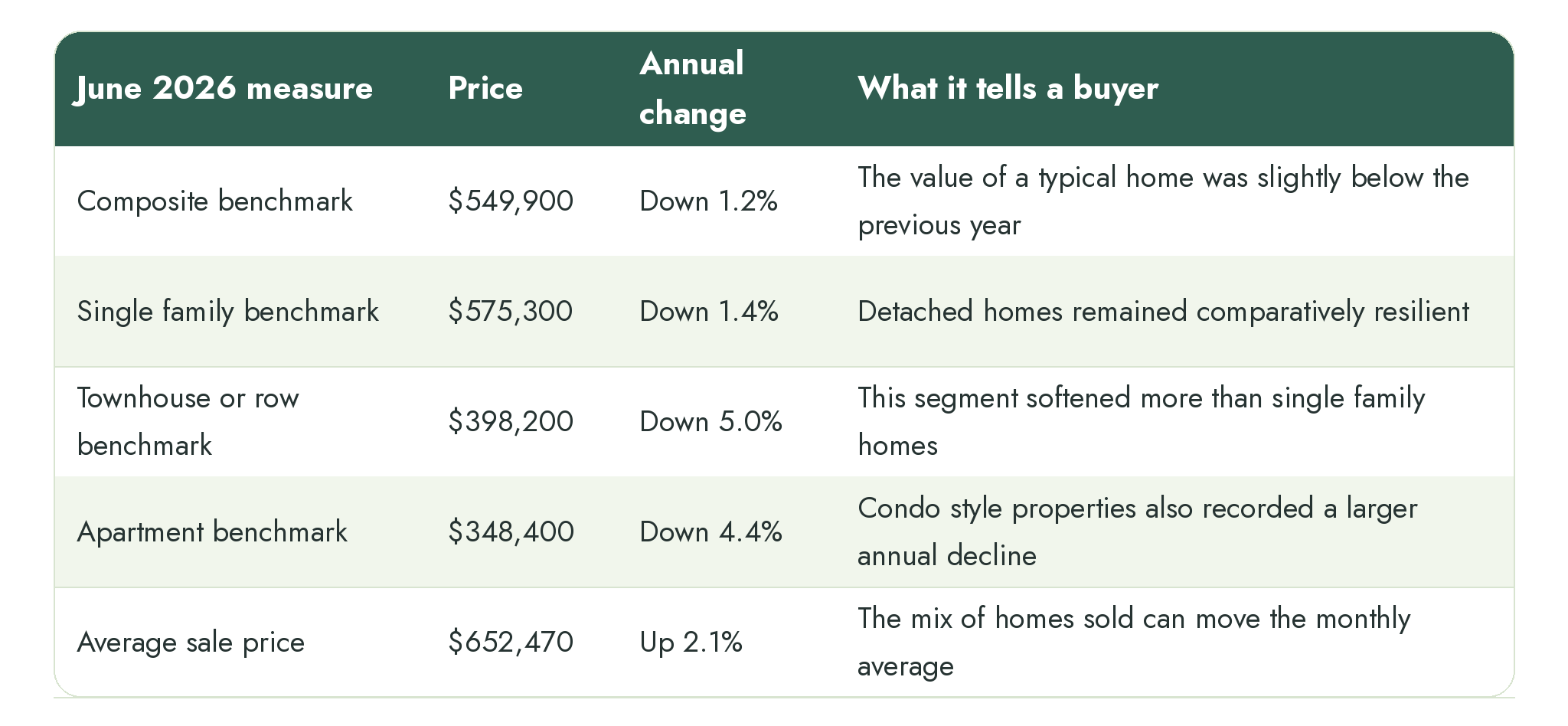
How to read these figures: The Kingston home price index benchmark estimates the price of a typical home and is less affected by the mix of properties sold in one month. The average price can rise when more expensive homes account for a larger share of sales, even as benchmark prices soften. Figures are from the June 2026 Kingston and Area Real Estate Association report published through CREA. Market statistics change monthly.
Why Kingston Has Shifted Towards Buyers
The most important change is supply. June brought 858 new residential listings, which was 12.5% more than a year earlier and the highest number ever recorded for that month. By the end of June, buyers could choose from 1,534 active residential listings; that was 5.9% more than the previous year and the highest June inventory in ten years.
With 4.3 months of inventory, compared with a long-run June average of 2.7 months, supply is taking longer to absorb. The local association described Kingston as being in buyer’s territory. Scotiabank’s national housing analysis also placed Kingston in the buyer’s market category in spring 2026 based on the sales-to-new-listings ratio.
Several practical factors help explain the Kingston buyer’s market 2026 conditions:
- Greater choice: Buyers can compare more homes rather than competing for a limited set of listings.
- More cautious demand: Economic uncertainty has led many households to be more deliberate about major purchases.
- Closer attention to ownership costs: Renovations, insurance, utilities, property taxes, and maintenance now receive more scrutiny during the buying decision.
- A gap in price expectations: Some sellers remain influenced by peak-market conditions from 2021 and 2022, while today’s buyers are more price-sensitive. That gap can lead to longer negotiations or more time on the market.
For more context on the wider economy, read Canada’s technical recession: what it means for mortgage rates and your home purchase. The economic picture matters, but this local supply-and-demand data directly shapes the shopping experience in Kingston.
Kingston is not One Market: Neighbourhood and Property Type Matter
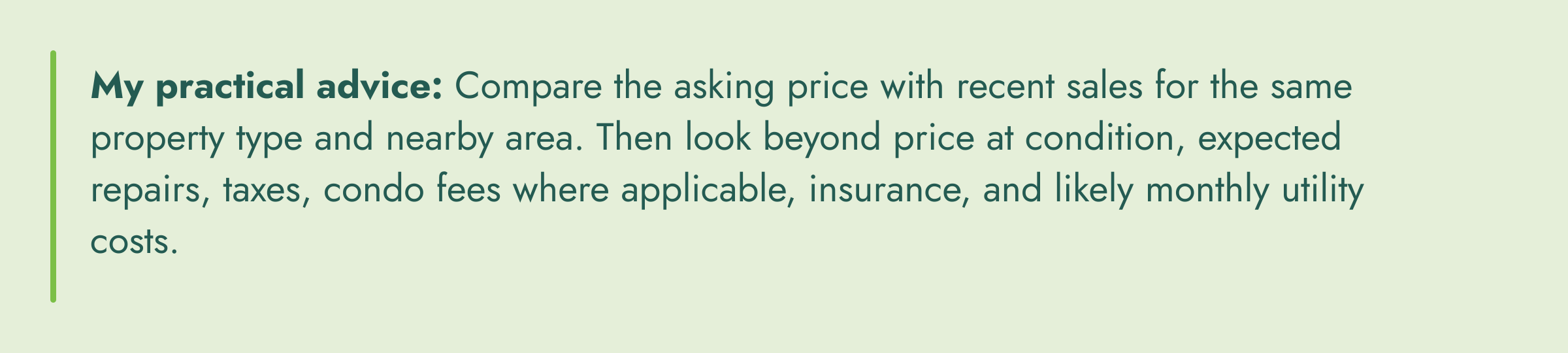
A citywide Kingston real estate market update is a useful starting point, not a valuation for a specific home. A well-maintained detached property in a highly sought-after neighbourhood may attract attention quickly, even when the overall market gives buyers more leverage. Another property may need a price adjustment or sit for longer because of its location, condition, carrying costs, or layout.
The June data also shows that property types are not moving at the same pace. The single-family benchmark was down 1.4% from a year earlier, while the townhouse benchmark declined 5% and the apartment benchmark declined 4.4%. Buyers focused on townhouses or condos may therefore see different choices and negotiating conditions than buyers looking for detached homes.
If you are still deciding between Kingston and another Eastern Ontario community, my guide to the Best Places to Buy a Home in Eastern Ontario in 2026 can help you compare price points, services, commute needs, and lifestyle priorities.
What a Buyer’s Market Can Mean for Your Purchase
A buyer’s market can offer more choice, greater negotiating flexibility, and additional time to compare properties carefully. For someone considering buying a home in Kingston in 2026, the advantage is not simply the possibility of a lower price; it is the opportunity to make a more informed decision with less pressure.
More Time to Evaluate the Home
Higher inventory can make it easier to compare several suitable properties. You may have more opportunity to review disclosures, consider renovation needs, and discuss the property with your real estate and mortgage professionals.
More Room for Useful Conditions
Financing and inspection conditions may be more acceptable than during a highly competitive seller’s market. Conditions protect the buyer; they should be written with appropriate professional advice.
A Stronger Negotiating Position
Some sellers may be open to negotiating the price, closing date, or the items included. The amount of flexibility still depends on the property, its condition, local demand, and the seller’s circumstances.
Less Pressure from Competing Offers
Multiple offers can still happen for attractive, well-priced homes. However, a market with more supply generally reduces the need to treat every listing as immediate competition.
A softer market does not mean prices are collapsing. The composite benchmark was only 1.2% lower than a year earlier, while the June average sale price was 2.1% higher. This is a market with more buyer choice and modest price movement, not evidence of a guaranteed steep decline. My article on understanding the Canadian property bubble explains why dramatic headlines should not replace local data or personal planning.
How Mortgage Rates Factor Into the Decision
Home price is only one part of affordability. Your interest rate, mortgage amount, amortization, property taxes, heating costs, and other monthly obligations all affect what you can comfortably carry.
The Bank of Canada maintained its policy interest rate at 2.25% on July 15, 2026. It has held that level since late 2025. This has kept the policy rate backdrop for variable and prime-linked mortgages stable, although each lender sets its own prime rate and mortgage pricing.
Fixed mortgage rates work differently. They are more directly influenced by Government of Canada bond yields, lenders’ funding costs, competition, and the term you choose. As a result, fixed rates can change even when the Bank of Canada does not move its policy rate. You can review the latest decision on the Bank of Canada policy interest rate page, then read fixed vs. variable mortgage in Canada 2026: which should you choose? for a practical comparison.
A responsible housing forecast for Kingston, Ontario, cannot predict exactly how prices or interest rates will move in 2026. What we can say is that buyers currently have more property choice than the long-run June norm, while the policy rate has stopped climbing. For a financially prepared buyer, that combination can create a more manageable shopping environment than the rushed markets of recent years.
Some lenders offer rate holds for up to 120 days. A rate hold can protect an eligible buyer if that lender’s rate rises during the hold period, while still allowing us to review options if pricing improves. The available period and conditions vary by lender and mortgage type.
Signs You Are Personally Ready to Buy
The question “Should I buy a house in Kingston now?” cannot be answered by inventory and interest rates alone. Before you start making offers, look for these signs of financial readiness:
- Your income is stable: You can document your earnings and expect them to support the mortgage over time.
- Your debt is manageable: Existing loans, credit cards, support, and housing obligations leave room in your budget.
- Your down payment is ready: The funds are available, properly documented, and separate from the money needed for closing costs.
- You have an emergency cushion: Buying will not leave you without funds for repairs, moving expenses, or an unexpected change in income.
- You understand your likely timeline: You expect the home to suit you for several years and have considered the cost of selling or breaking a mortgage early.
- You have a preapproval: You know the approximate mortgage amount a lender may consider and can shop within a realistic total budget.
A preapproval is an important planning tool, but it is not final approval. The lender must still review the chosen property, the appraisal (where required), documents, and any changes to your finances. My guide to Understanding the Mortgage Pre-Approval Process explains what to expect before and after you find a home.
So: Is Now a Good Time to Buy in Kingston?
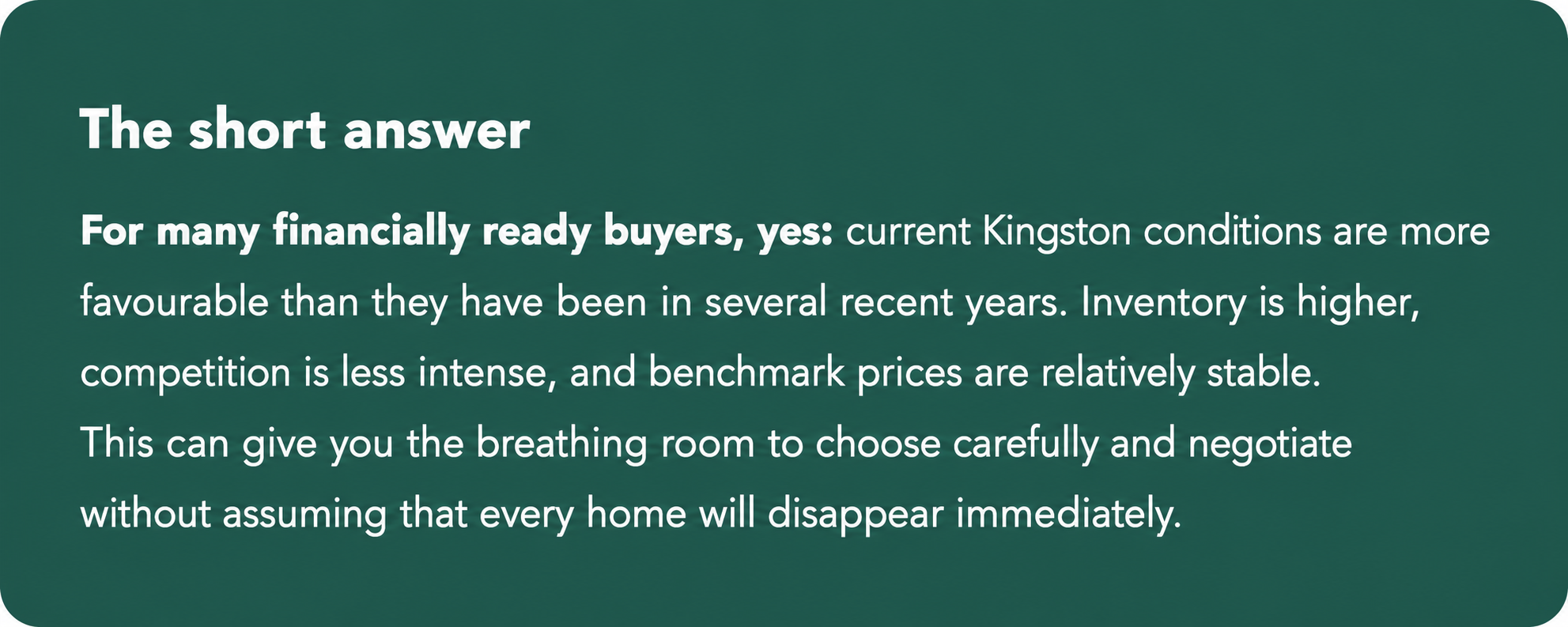
If you are waiting for a major price decline, note that Kingston home prices are not showing signs of a freefall in 2026. In June, the benchmark price was slightly lower year over year, while the average sale price was slightly higher.
Waiting can be useful if it allows you to:
- Increase your down payment
- Reduce existing debt
- Improve your credit
- Build a larger emergency fund
However, delaying your purchase only in expectation of a guaranteed market drop is uncertain.
If you need to sell before buying, the market works both ways. Your home may take longer to sell or need a more realistic asking price, but you may also gain negotiating power on your next purchase.
In this case, carefully coordinate:
- The sale of your current home
- Your next purchase
- Mortgage financing
- Closing dates
Ultimately, the best time to buy is when the mortgage and total cost of homeownership fit your finances, the property supports your plans, and you can proceed without stretching your budget. Kingston’s current market does not create financial readiness; it simply reduces some of the competitive pressure that once made decision-making more difficult.
How a Local Mortgage Broker Helps You Navigate Kingston’s Market
As a Kingston mortgage broker, I help you translate the market into a financing plan tailored to your goals. That starts with your real budget, not the maximum possible purchase price. I can compare options from more than 50 lenders, explain differences in rates and mortgage terms, and help you understand how a lender may assess your income, debts, down payment, and chosen property.
This is also valuable if you are self-employed, earn variable or non-standard income, are buying your first home, or need a lender whose guidelines fit circumstances that are not straightforward. I can arrange preapproval support and review available rate holds so you can shop with more confidence in a slower, more deliberate market.

FAQs
-
Does a buyer’s market mean every Kingston seller will accept a lower offer?
No. A buyer’s market may provide more choice and negotiating flexibility, but each seller’s position is different. The property’s condition, location, asking price, and level of buyer interest will still influence negotiations.
-
Should I wait for mortgage rates to fall before buying in Kingston?
Waiting does not guarantee a better overall outcome. Rates, home prices, and available inventory can all change. I recommend deciding based on what you can comfortably afford now rather than trying to predict the exact bottom of the market.
-
Can I include financing and home inspection conditions in my offer?
Market conditions may give buyers more opportunity to include protective conditions. A financing condition is still important because a pre-approval does not guarantee final approval for every property.
-
How much should I budget beyond the down payment?
You may also need funds for legal fees, a home inspection, appraisal costs, land transfer tax, moving expenses, and adjustments at closing. First-time buyers may qualify for certain rebates, but it is still important to maintain a financial cushion.
-
Is the lowest mortgage rate automatically the best option?
Not always. Prepayment privileges, penalties, portability, rate type, and other mortgage terms can affect the overall value of the loan. I help buyers compare the complete mortgage structure instead of focusing only on the advertised rate.
-
When should I speak with a mortgage broker if I am considering a Kingston home?
It is best to speak with a mortgage broker before you begin making offers. I can help you establish a practical budget, review down payment options, and identify potential qualification concerns early in the process.
Thinking About Buying in Kingston? Let’s Look at Your Numbers Together.
A market update can show you the conditions; a personal mortgage review can show you what they mean for your budget. Let’s discuss your down payment, monthly comfort level, lender options, and next steps
This article provides general information and is not a mortgage approval or financial advice. Market data, mortgage rates, lender guidelines, and qualification requirements can change.